
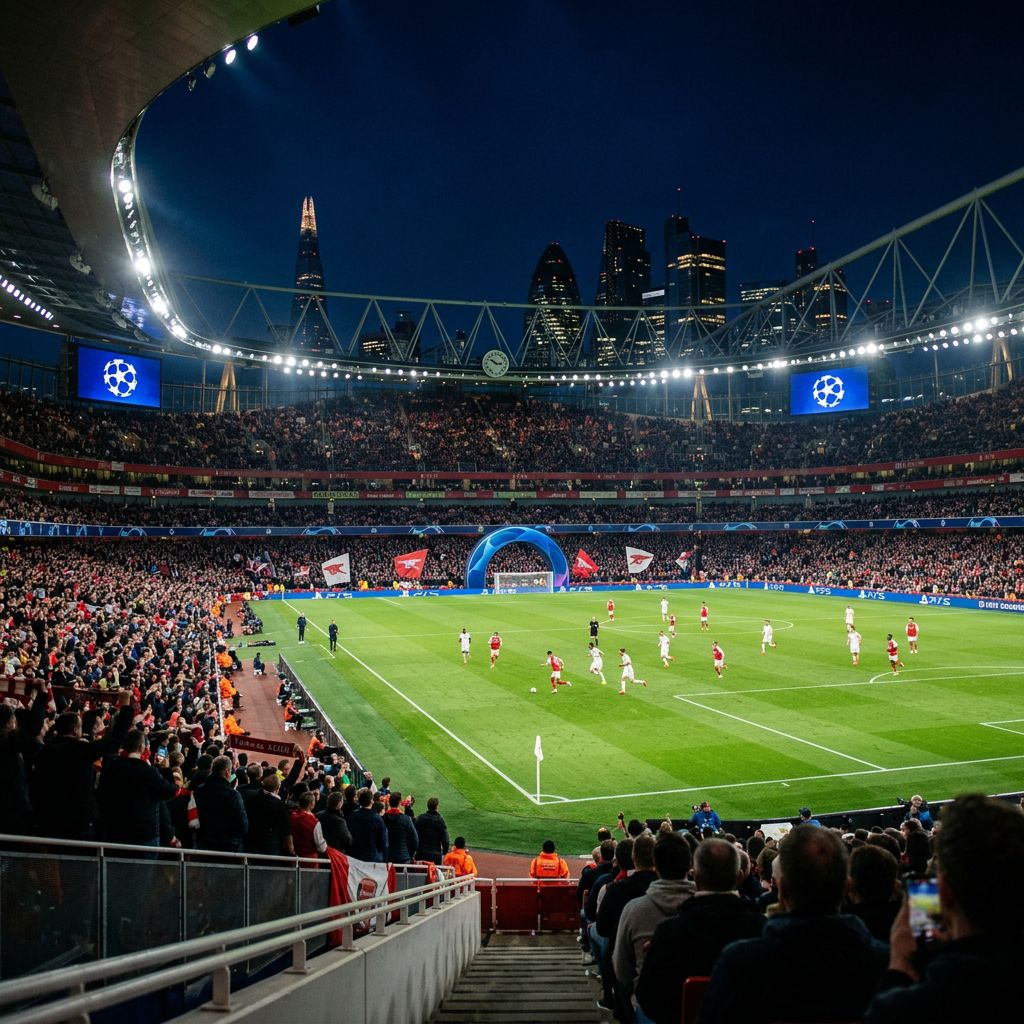
A single late goal in midweek can now reorder the entire European season for 36 clubs. The expanded league phase turns every result into a direct shift on one shared table, and the margin between playoff safety and elimination often shrinks to a single goal difference.
How the League Phase Determines Champions League Standings
UEFA replaced the old group stage with one 36-team league. Each club plays eight matches, three points for a win and one for a draw. The single table updates after every matchday and lists goal difference and goals scored as the first tiebreakers when points are level.
Opponents come from four seeding pots, so a club from Portugal might host a team from Azerbaijan one week and travel to face a Spanish side the next. That mix produces sudden swings in position. A team that wins its first four games can still drop several places after two dropped points against mid-ranked sides later in the phase.
The top eight advance directly to the round of 16. Teams in positions nine to 24 play a two-legged playoff for the remaining eight knockout places. Clubs below 24th exit European competition. Managers now study the live table after each round to decide rotation and set-piece focus for the next block of fixtures.
Fans can follow the full picture on the official UEFA standings page. Updates appear within minutes of full time, and the single-table format means one surprise draw between lower sides can lift a third team several places overnight.
Tiebreakers That Decide Dramatic Qualification Battles
When clubs finish level on points, UEFA applies a fixed order of tiebreakers. Head-to-head results come first, followed by overall goal difference, goals scored, and away goals in head-to-head matches. Disciplinary points and club coefficients serve as the final deciders.
Why Goal Difference Matters More Now
Teams play two extra matches compared with the old group stage, so small defensive lapses carry heavier weight. A club that concedes once in the final minutes can lose a playoff spot weeks later when the table tightens. Managers therefore instruct defenders to stay compact even when the scoreline looks safe.
Analysts now track expected goals and set-piece efficiency because those metrics often forecast which side will gain the edge on tiebreakers. Historical cases show one own goal or red card has cost clubs millions in prize money by flipping final positions on the last matchday.
Disciplinary records add another layer. A side with several yellow cards in key games risks losing out if points and goal difference match another team. Coaches must balance aggressive pressing with the need to avoid needless bookings that could decide qualification on the final tiebreaker.
| Rank Range | Outcome | Typical Points Needed |
|---|---|---|
| 1-8 | Direct round of 16 | 15+ |
| 9-24 | Two-legged playoff | 10-14 |
| 25-36 | Eliminated | Under 10 |
Who Stays in the Champions League and Who Drops Into Playoffs
After eight matchdays the top eight receive automatic seeding for the round of 16 draw and extra rest before knockouts begin. The next 16 clubs must win their playoff ties to reach the last 16. Those two-legged ties often turn on away goals and set-piece defending.
Clubs outside the top 24 leave European competition. For sides from smaller leagues, simply reaching the league phase already marks progress, yet the new format gives them a realistic route into the knockout stage if they collect points against similar-ranked opponents at home.
Live table position shapes immediate squad decisions. A team in tenth might rest attackers for a domestic fixture to keep them fresh for the playoff first leg. A side near 25th instead pushes every resource into its remaining European games to chase the final playoff spots.
Supporters benefit from setting position alerts after matchdays six and seven. Those updates show whether a win or draw will secure a playoff berth or force a must-win final fixture. The tightest races often involve three or four clubs separated by just two points on the closing matchday.
How Standings Shape Fan Engagement and Club Strategy
Live tables now fuel debate on social platforms and in matchday pubs. Supporters weigh whether their side needs three points or a single draw in the next fixture. That ongoing conversation keeps the competition visible even on weeks without headline fixtures.
Clubs adjust training emphasis according to table position. A side near the playoff line may add extra set-piece drills because clean sheets protect goal difference. Finance teams track projected revenue from deeper runs when the standings suggest a realistic path to the quarterfinals.
Fixture congestion remains the chief complaint from managers, yet the extra matches also generate more memorable nights that sustain interest through spring. One club might accept a domestic defeat to rest key players for a must-win European game that lifts it from 18th to 11th.
Supporters gain most by following not only their own results but also the clubs immediately above and below in the table. Knowing which outcome helps or hurts tiebreaker scenarios adds depth to every match watched under the new system.
Historical Shifts and Future Outlook for the League Phase
The change from eight groups of four to one large league altered how clubs plan their autumn and winter schedules. In the old format a team could finish second with seven or eight points. Now roughly 12 to 15 points are usually required to reach the playoff zone, which encourages bolder tactics from the first matchday onward.
Early data from the first season under the new rules shows an average of 2.8 goals per game across the 144 league-phase fixtures. UEFA notes that revenue sharing now reaches more national associations because 36 teams take part instead of 32. Upsets occur more frequently since every club faces a broader range of opponents.
Coaches report that players train with sharper focus because every result feeds the same table. The playoff round adds two high-profile games for teams ranked 9-24, extending the European season and creating additional revenue opportunities for clubs that would have exited earlier under the previous system.
Recruitment will continue to shift toward players strong in both boxes, since clean sheets and set-piece goals frequently settle tiebreakers. Fans can expect more last-matchday drama where one result decides direct qualification or a playoff path. The standings will keep producing fresh storylines long after the group-stage era closed.